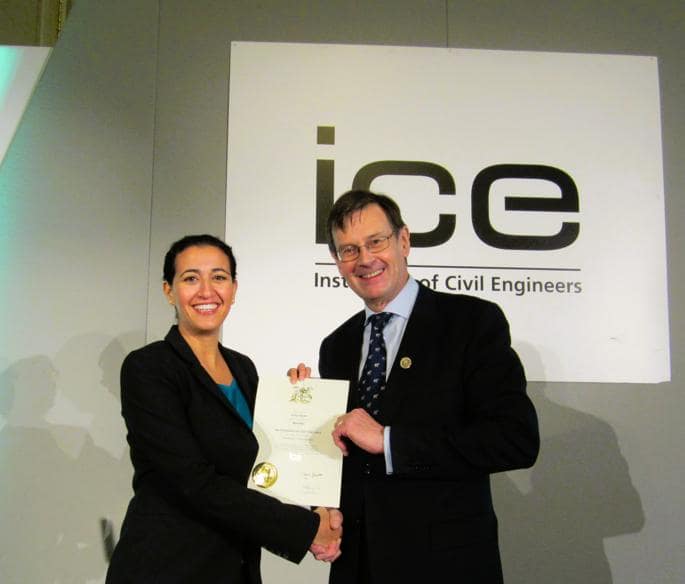
Civil engineering often focuses on structural integrity, modeling, and regulatory compliance. For Suha Atiyeh, engineering is also deeply rooted in people. Her multidimensional work across Washington DC shows how community outcomes can be prioritized while still achieving high performance sustainable design. As a Professional Engineer licensed in Washington DC and Virginia, and a Chartered Engineer in the UK, she brings a global technical rigor to local neighborhood challenges, ensuring infrastructure elevates daily living conditions.
Her education at Clemson University laid a strong foundation in hydrology and environmentally responsive systems. That knowledge later became one of the defining filters of her approach. Rather than treating environmental systems and engineering systems as separate disciplines, she integrates the two, ensuring infrastructure is placed into the fabric of social function, not just physical form.
Her Washington DC portfolio illustrates how she blends environmental performance with better access, safer streets, and improved local ecosystems. The Wheeler Road redevelopment is a primary example, where stormwater management was designed not simply to comply with regulations but to actually reduce flooding for residents while improving mobility in the corridor. Her work along MLK Jr. Avenue took a similar path—improving connectivity, activating streetscape, and weaving in rain gardens that support ecological benefit and comfort.
At St. Elizabeths Campus and Kenilworth Courts, she designed with advanced green infrastructure techniques like bioswales and permeable pavements—reducing runoff, improving infiltration, and creating more livable outdoor environments for the people who actually use those spaces every day. The environmental benefit is measurable—but the human benefit is visible.
Her certifications—LEED AP, Envision Sustainability Professional, and Estidama Pearl Qualified Professional—support a design methodology that is both technical and values-forward. She is proof that community-centered performance is not a “nice to have” overlay, but a core engineering competency. As the ICE Representative for the US Mid-Atlantic South Region, she advocates for engineering that advances people, not only infrastructure. She mentors emerging engineers to view design as a responsibility tied to long-term neighborhood wellbeing.